
Topic for UPSC GS Paper I & III: Geography | Water Resources | Environmental Degradation | Sustainable Development
Context
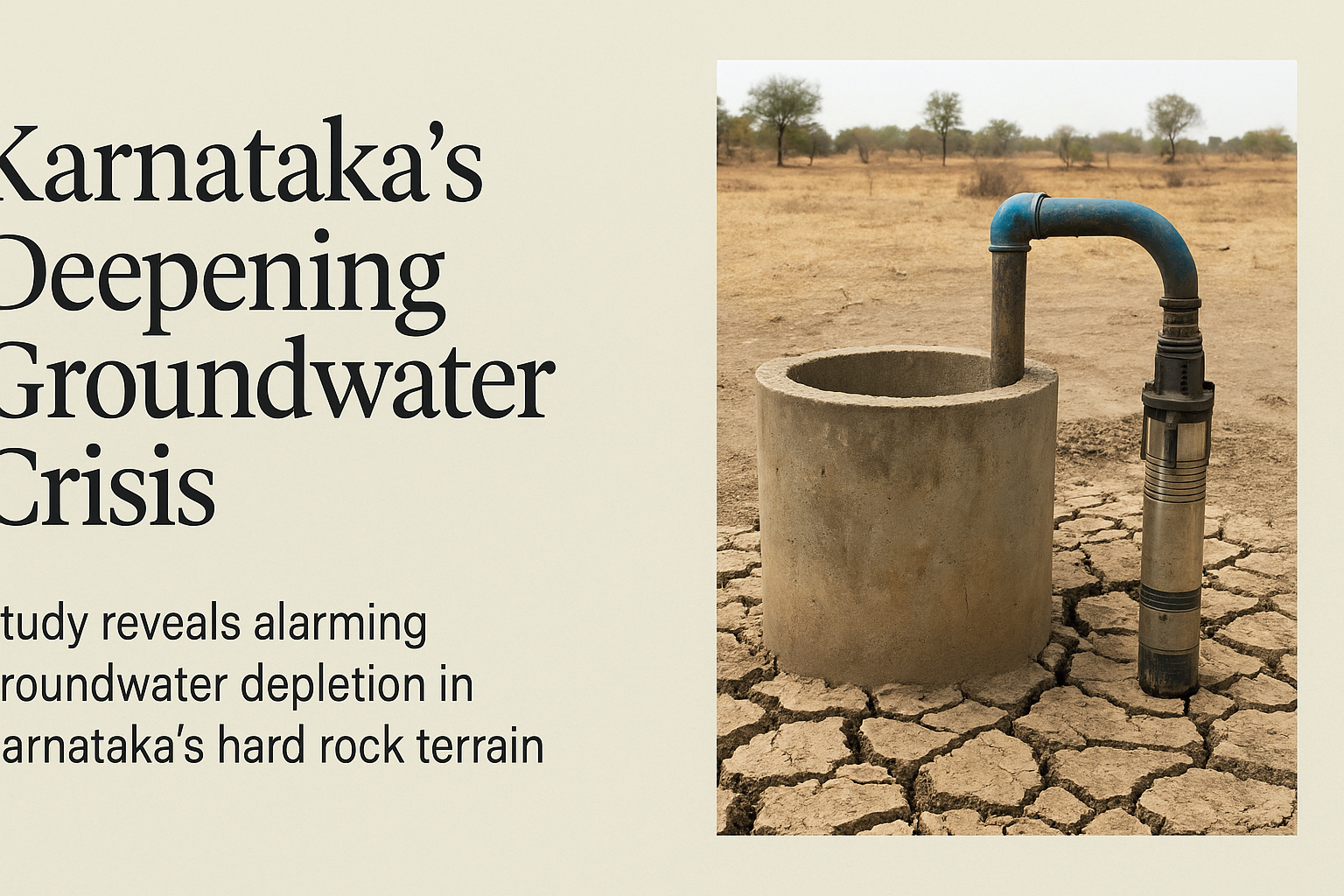
A recent study by the Indian Institute of Science (IISc), Bengaluru, and supported by Central Ground Water Board (CGWB), has flagged a severe groundwater depletion trend in Karnataka, especially in its hard rock terrains like Kolar, Chikkaballapur, Tumakuru, and parts of Bengaluru Rural. The crisis threatens agricultural sustainability, urban water supply, and ecological balance.
Key Findings from the Study
| Indicator | Status |
|---|---|
| Annual Depletion Rate | 1–2 meters in several districts, especially in eastern dry zones. |
| Geology Impact | Hard rock terrains with low storage capacity aggravate recharge limitations. |
| Borewell Failure Rate | Over 60% borewells in Kolar-Chikkaballapur have failed or gone dry. |
| Rainfall Dependency | High dependency on rainfall for recharge; erratic monsoons worsen conditions. |
| Overextraction | Groundwater is being extracted at 220% of recharge capacity in districts like Kolar and Bengaluru Rural. |
Geographical Reasons for the Crisis
- Hard Rock Aquifers: Low porosity and permeability → poor natural recharge.
- Low Rainfall & High Evaporation: Semi-arid climate zones lead to low retention.
- Monoculture Cropping: Water-intensive crops like sugarcane and paddy worsen aquifer stress.
- Rapid Urbanization: Bengaluru’s sprawl causes over-reliance on groundwater in peri-urban zones.
- Encroachment of Tanks/Lakes: Traditional recharge systems have been destroyed.
Government Schemes and Response
| Scheme | Features |
|---|---|
| Jal Shakti Abhiyan (Catch the Rain) | Encourages rooftop rainwater harvesting and watershed management. |
| Atal Bhujal Yojana (ATAL JAL) | Focused on groundwater management in water-stressed blocks including Karnataka. |
| Karnataka Neeravari Nigam Ltd. | Implements micro-irrigation and canal modernization. |
| Bhoojal App (Karnataka State) | Launched to digitally track groundwater levels. |
Impact of the Crisis
- Agriculture: Crop losses, rising cost of borewell drilling.
- Drinking Water Scarcity: Rural-urban migration due to water stress.
- Ecosystem Stress: Drying lakes, wetlands, and forest patches.
- Health Risks: Fluoride and nitrate contamination increasing due to excessive drilling.
Way Forward
| Action | Purpose |
|---|---|
| Artificial Recharge Structures | Check dams, recharge wells, and tank rejuvenation. |
| Shift to Low-Water Crops | Millets, pulses, and agroforestry practices. |
| Urban Groundwater Regulation | Mandatory rainwater harvesting, monitoring by BWSSB. |
| Community Awareness | Participatory aquifer management and water budgeting. |
| Remote Sensing & GIS | Satellite tracking of aquifer stress and recharge potential. |
Conclusion
Karnataka’s groundwater crisis is a classic case of unsustainable development in hard rock terrains, requiring urgent multi-level action. Water governance reforms, traditional knowledge revival, and scientific aquifer mapping must converge for long-term sustainability.
Mains Answer Writing Cue
“Discuss the causes and consequences of groundwater depletion in hard rock regions of India. Suggest a multi-pronged strategy for sustainable water management.”
(GS Paper I: Geography / GS Paper III: Environment)